Portsmouth residents trying to stop development plan
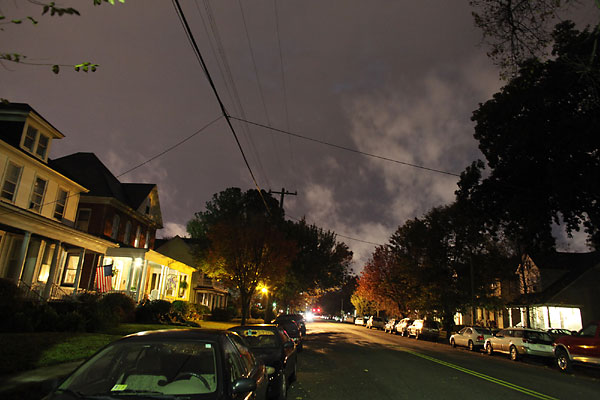
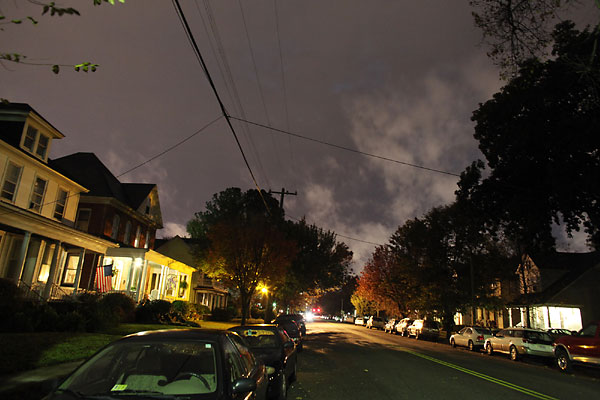
Some residents of Portsmouth’s Port Norfolk are up in arms over a development they fear will disturb their community’s character. (David B. Hollingsworth | The Virginian-Pilot)
Time was running out on the people gathered in John Lifsey's house. They faced nothing less than an attack on their neighborhood, and they had just days left to mount a defense.
Those are the stakes in Port Norfolk, at least in the eyes of some who live in the historic, economically mixed neighborhood by the entrance to the Elizabeth River's Western Branch.
A developer wants to build about two dozen houses on 7 acres of grassy, city-owned land that once was the site of an elementary school. Neighbors will try to block the project Tuesday night by citing concerns that range from environmental risks and flooding problems to fragile home values and lost green space.
A dozen residents, many of them parents and professionals, have met weekly since September. They have circulated petitions, created T-shirts, started a blog, made YouTube videos, hired their own geologist and produced a 40-plus-page presentation with footnotes.
The developer and city staff have countered with test results and assurances that the project is good for the city. The ground is not toxic, drainage will not be a problem and the new homes will generate $52,000 annually in net revenue for Portsmouth, they say. They will ask the council to transfer the land and move the project forward.
Council members will decide whether to approve, deny or postpone the transfer to the Economic Development Authority. The EDA, if given the land, will begin negotiations to sell it to Hull's Creek Properties, a venture by Bob Arnette of Coastal Virginia Developers and Gary Werner of Franciscus Homes.
The developers, who named the project Hull's Creek at Port Norfolk, reduced the number of homes in their proposal earlier this fall by almost half and added a wetlands area.
They said they were responding to residents' concerns.
But five months of meetings, e-mails and other correspondence on the project have produced more distrust than agreement between the two sides. The neighbors saw the downsiz ing as a financial decision, not an olive branch.
Last week, alongside members of the development team, City Manager Kenneth Chandler met with residents to hear them out. The neighbors felt it was a show.
"I think we did a superb job of stating our concerns, but I was so concerned that we gave them too much information," said Deborah Massenburg, a resident of nearby Lake Shores who works for the Army Corps of Engineers.
At least a few in the city believe the neighborhood group is unreasonable.
Economic Development Authority Chairman C.W. "Luke" McCoy told fellow board members last week they might be contacted by residents. Be careful what you say, he warned, because they are adamantly opposed to the project.
"In fact, they would like to have no development in the city of Portsmouth, not just the Port Norfolk neighborhood," McCoy said.
The residents scoffed when they heard the accusation. They said they value economic development and want it where it's appropriate.
Sharon Rich, a former real estate marketing coordinator who bought her Port Norfolk house last year, worried an outsider might take the neighborhood committee as "a bunch of whack-jobs."
"We're really not," she said. "We're just passionate."
And so they went over their plan last Tuesday night in Lifsey's living room. Committee members talked for two hours about strategy and roles at the council meeting.
Someone saw workers taking more soil samples earlier that day. Those gathered suspected the developers would get results back in time to try to trump the residents' concerns about ground quality.
"Walt's doing environmental, but they may shoot his legs out from under him before he gets a chance," Lifsey said, referring to a group member. Lifsey is a project manager for BAE Systems.
The developers, as well as Economic Development Director Patrick Small, insist that prior soil samples showed nothing alarming.
Arsenic levels exceeded U.S. Environmental Protection Agency thresholds for residential soil, but they represented naturally occurring background levels in the area, according to a report from Stokes Environmental Associates, a firm working for the developers and the city.
Likewise, two of 11 samples showed lead concentrations that exceed a federal guideline for play areas but fell short of the limit for other parts of residential yards, the report said. The average concentration of lead in the samples was below the threshold for play areas, it said.
The residents hired an environmental company to review the developer's assessments and do additional tests. Their geologist, Jefferson Ghent, took three samples, and some showed arsenic and cadmium levels that he said were high enough to cause concern.
The land, a former creek, was filled in the 1950s. The developer's assessment said the material was mostly sands and clay and some construction debris.
Ghent said his biggest worry is that precautions are not being taken to manage the site like the landfill it essentially is.
"They risk digging this stuff up and exposing people to hazardous contaminants," he said. "There are hazardous materials out there."
Small said Friday that another round of soil tests that week "came back clean," meaning they were within EPA thresholds or consistent with soils in the area.
Ralph Batten has seen this before. The 90-year-old Port Norfolk resident lives across the street from the proposed development site. In the 1950s he watched trucks unload dredging materials to fill in the creek.
He finds it absurd that someone wants to build homes on the land, just as he and others thought it was wrong 50 years ago to build an elementary school on it.
A September 1959 article in The Virginian-Pilot reported that the school principal tested for methane all summer before the building opened, but the needle on his device never budged. The measure was taken after experts found that rotting, sub-surface vegetation had created methane gas in burnable amounts, the article said.
Batten said they had a vocal neighborhood committee back then, too. They even had two people with doctorate degrees in chemistry on their side. He said they "begged and begged" the city not to build the school.
"But they did," Batten said. "They built it."
Dave Forster, (757) 446-2627, dave.forster@pilotonline.com