Sea Level Rise Concerns
The panelists are Dr. James Koch, former President of ODU; former Portsmouth
Council Member and present PPIC Chair Doug Smith; and former Suffolk
Mayor and current Hampton Roads Partnership President Dana Dickens. The
implications of rising sea level/sinking land are rather stark for
Hull's Creek and other waterfront sections of our region. The first
eleven to twelve minutes of the program are the most relevant to the
Port Norfolk proposed development.
http://whatmatters.tv/
HAPPY NEW YEAR!
Update: Both Stokes Environmental, the consulting firm that performed the first and most recent environmental testing, and the VDEQ office reviewing those environmental reports have suggested that the developer participate in DEQ voluntary redemiation programs. Please read the new document "December 21, 2010, VDEQ letter" and look at at least the cover letter for the environmental reports for the two easternmost parcels of land ("Phase II Environmental Site Assessment Report") at portsmouthvaed.com/old-port-
We are talking to the Chesapeake Bay Foundation about the new EPA regulations regarding stormwater.
We are in touch with the EPA about all these matters.
Wish list:
A lawyer.
Contested land transfer OK'd in Portsmouth
PORTSMOUTH
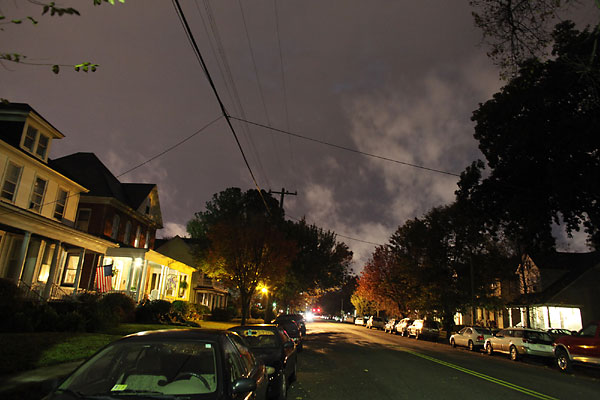
Faced with a packed house that mostly opposed the move, the City Council on Tuesday approved a land transfer to move a controversial housing development forward.
The council voted 5-2 to advance Hull's Creek at Port Norfolk, a project that would build about two dozen homes on around 7 acres of open field between the Lake Shores and Port Norfolk communities.
Some neighbors have been working for months against the project, and they crowded the council chambers Tuesday to try to sway the vote. They argued that the project doesn't make sense in this housing market, it isn't safe because of soil contaminants, and it would destroy a rare patch of green space in the city.
"The answer to me is not development, development, development. It's revitalization of what we have," said Frank Thomson, a nearby resident.
Council members have made economic development a priority, however, and they received assurances from the developers that tests showed the ground was clean and the project would contribute about $50,000 annually to the city's bottom line.
The land transfer moves the property to the city's Economic Development Authority, which will begin negotiating a sale of the land to Hull's Creek Properties, a venture of Bob Arnette of Coastal Virginia Developers and Gary Werner of Franciscus Homes.
Councilmen Paige Cherry and Curtis E. Edmonds Sr. voted against the transfer.
Despite the many opponents, some people supported the project and spoke in favor of it. "I want the houses, and they can only bring my property value up," said Sharon Turner, whose home borders the property.
City Council Vote
http://www.portsmouthva.gov/council/video.aspx
Front-Line City in Virginia Tackles Rise in Sea

The city of Norfolk, Va., is spending a lot of money to raise Richmond Crescent by 18 inches to avert routine flooding at high tide.
If the moon is going to be full the night before Hazel Peck needs her car, for example, she parks it on a parallel block, away from the river. The next morning, she walks through a neighbor’s backyard to avoid the two-to-three-foot-deep puddle that routinely accumulates on her street after high tides.
For Ms. Peck and her neighbors, it is the only way to live with the encroaching sea.
As sea levels rise, tidal flooding is increasingly disrupting life here and all along the East Coast, a development many climate scientists link to global warming.
But Norfolk is worse off. Situated just west of the mouth of Chesapeake Bay, it is bordered on three sides by water, including several rivers, like the Lafayette, that are actually long tidal streams that feed into the bay and eventually the ocean.
Like many other cities, Norfolk was built on filled-in marsh. Now that fill is settling and compacting. In addition, the city is in an area where significant natural sinking of land is occurring. The result is that Norfolk has experienced the highest relative increase in sea level on the East Coast — 14.5 inches since 1930, according to readings by the Sewells Point naval station here.
Climate change is a subject of friction in Virginia. The state’s attorney general, Ken T. Cuccinelli II, is trying to prove that a prominent climate scientist engaged in fraud when he was a researcher at the University of Virginia. But the residents of coastal neighborhoods here are less interested in the debate than in the real-time consequences of a rise in sea level.
When Ms. Peck, now 75 and a caretaker to her husband, moved here 40 years ago, tidal flooding was an occasional hazard.
“Last month,” she said recently, “there were eight or nine days the tide was so doggone high it was difficult to drive.”
Larchmont residents have relentlessly lobbied the city to address the problem, and last summer it broke ground on a project to raise the street around the “u” by 18 inches and to readjust the angle of the storm drains so that when the river rises, the water does not back up into the street. The city will also turn a park at the edge of the river back into wetlands — it is now too saline for lawn grass to grow anyway. The cost for the work on this one short stretch is $1.25 million.
The expensive reclamation project is popular in Larchmont, but it is already drawing critics who argue that cities just cannot handle flooding in such a one-off fashion. To William Stiles, executive director of Wetlands Watch, a local conservation group, the project is well meaning but absurd. Mr. Stiles points out that the Federal Emergency Management Agency has already spent $144,000 in recent years to raise each of six houses on the block.
At this pace of spending, he argues, there is no way taxpayers will recoup their investment.
“If sea level is a constant, your coastal infrastructure is your most valuable real estate, and it makes sense to invest in it,” Mr. Stiles said, “but with sea level rising, it becomes a money pit.”
Many Norfolk residents hope their problems will serve as a warning.
“We are the front lines of climate change,” said Jim Schultz, a science and technology writer who lives on Richmond Crescent near Ms. Peck. “No one who has a house here is a skeptic.”
Politics aside, the city of Norfolk is tackling the sea-rise problem head on. In August, the Public Works Department briefed the City Council on the seriousness of the situation, and Mayor Paul D. Fraim has acknowledged that if the sea continues rising, the city might actually have to create “retreat” zones.
Kristen Lentz, the acting director of public works, prefers to think of these contingency plans as new zoning opportunities.
“If we plan land use in a way that understands certain areas are prone to flooding,” Ms. Lentz said, “we can put parks in those areas. It would make the areas adjacent to the coast available to more people. It could be a win-win for the environment and community at large and makes smart use of our coastline.”
Ms. Lentz believes that if Norfolk can manage the flooding well, it will have a first-mover advantage and be able to market its expertise to other communities as they face similar problems.
But she also acknowledges that for the businesses and homes entrenched on the coast, such a step could be costly, and that the city has no money yet to pay them to move.
In the short run, the city’s goal is just to pick its flood-mitigation projects more strategically. “We need to look broadly and not just act piecemeal,” Ms. Lentz said, referring to Larchmont.
To this end, Norfolk has hired the Dutch firm Fugro to evaluate options like inflatable dams and storm-surge floodgates at the entrances to waterways.
But to judge by the strong preference in Larchmont for action at any cost, it may not be easy for the city to choose which neighborhoods might be passed over for projects.
Neighborhood residents lobbied hard for the 18-inch lifting of their roadway, even though they know it will offer not much protection from storms, which are also becoming more frequent and fearsome. Many say that housing values in the neighborhood have plummeted and that this is the only way to stabilize them.
Others like Mr. Schultz support the construction, even though they think the results will be very temporary indeed.
“The fact is that there is not enough engineering to go around to mitigate the rising sea,” he said. “For us, it is the bitter reality of trying to live in a world that is getting warmer and wetter.”
Virginian Pilot Article!
Portsmouth residents trying to stop development plan
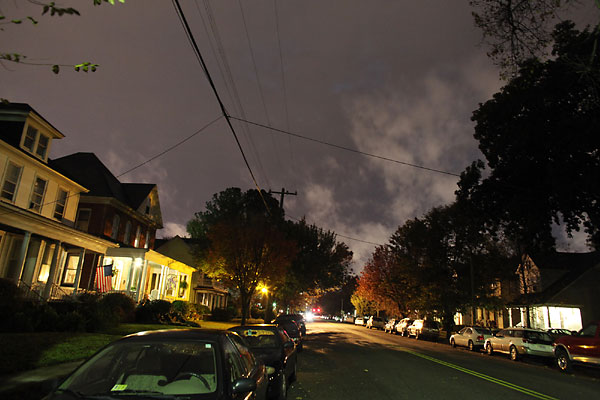
Some residents of Portsmouth’s Port Norfolk are up in arms over a development they fear will disturb their community’s character. (David B. Hollingsworth | The Virginian-Pilot)
Time was running out on the people gathered in John Lifsey's house. They faced nothing less than an attack on their neighborhood, and they had just days left to mount a defense.
Those are the stakes in Port Norfolk, at least in the eyes of some who live in the historic, economically mixed neighborhood by the entrance to the Elizabeth River's Western Branch.
A developer wants to build about two dozen houses on 7 acres of grassy, city-owned land that once was the site of an elementary school. Neighbors will try to block the project Tuesday night by citing concerns that range from environmental risks and flooding problems to fragile home values and lost green space.
A dozen residents, many of them parents and professionals, have met weekly since September. They have circulated petitions, created T-shirts, started a blog, made YouTube videos, hired their own geologist and produced a 40-plus-page presentation with footnotes.
The developer and city staff have countered with test results and assurances that the project is good for the city. The ground is not toxic, drainage will not be a problem and the new homes will generate $52,000 annually in net revenue for Portsmouth, they say. They will ask the council to transfer the land and move the project forward.
Council members will decide whether to approve, deny or postpone the transfer to the Economic Development Authority. The EDA, if given the land, will begin negotiations to sell it to Hull's Creek Properties, a venture by Bob Arnette of Coastal Virginia Developers and Gary Werner of Franciscus Homes.
The developers, who named the project Hull's Creek at Port Norfolk, reduced the number of homes in their proposal earlier this fall by almost half and added a wetlands area.
They said they were responding to residents' concerns.
But five months of meetings, e-mails and other correspondence on the project have produced more distrust than agreement between the two sides. The neighbors saw the downsiz ing as a financial decision, not an olive branch.
Last week, alongside members of the development team, City Manager Kenneth Chandler met with residents to hear them out. The neighbors felt it was a show.
"I think we did a superb job of stating our concerns, but I was so concerned that we gave them too much information," said Deborah Massenburg, a resident of nearby Lake Shores who works for the Army Corps of Engineers.
At least a few in the city believe the neighborhood group is unreasonable.
Economic Development Authority Chairman C.W. "Luke" McCoy told fellow board members last week they might be contacted by residents. Be careful what you say, he warned, because they are adamantly opposed to the project.
"In fact, they would like to have no development in the city of Portsmouth, not just the Port Norfolk neighborhood," McCoy said.
The residents scoffed when they heard the accusation. They said they value economic development and want it where it's appropriate.
Sharon Rich, a former real estate marketing coordinator who bought her Port Norfolk house last year, worried an outsider might take the neighborhood committee as "a bunch of whack-jobs."
"We're really not," she said. "We're just passionate."
And so they went over their plan last Tuesday night in Lifsey's living room. Committee members talked for two hours about strategy and roles at the council meeting.
Someone saw workers taking more soil samples earlier that day. Those gathered suspected the developers would get results back in time to try to trump the residents' concerns about ground quality.
"Walt's doing environmental, but they may shoot his legs out from under him before he gets a chance," Lifsey said, referring to a group member. Lifsey is a project manager for BAE Systems.
The developers, as well as Economic Development Director Patrick Small, insist that prior soil samples showed nothing alarming.
Arsenic levels exceeded U.S. Environmental Protection Agency thresholds for residential soil, but they represented naturally occurring background levels in the area, according to a report from Stokes Environmental Associates, a firm working for the developers and the city.
Likewise, two of 11 samples showed lead concentrations that exceed a federal guideline for play areas but fell short of the limit for other parts of residential yards, the report said. The average concentration of lead in the samples was below the threshold for play areas, it said.
The residents hired an environmental company to review the developer's assessments and do additional tests. Their geologist, Jefferson Ghent, took three samples, and some showed arsenic and cadmium levels that he said were high enough to cause concern.
The land, a former creek, was filled in the 1950s. The developer's assessment said the material was mostly sands and clay and some construction debris.
Ghent said his biggest worry is that precautions are not being taken to manage the site like the landfill it essentially is.
"They risk digging this stuff up and exposing people to hazardous contaminants," he said. "There are hazardous materials out there."
Small said Friday that another round of soil tests that week "came back clean," meaning they were within EPA thresholds or consistent with soils in the area.
Ralph Batten has seen this before. The 90-year-old Port Norfolk resident lives across the street from the proposed development site. In the 1950s he watched trucks unload dredging materials to fill in the creek.
He finds it absurd that someone wants to build homes on the land, just as he and others thought it was wrong 50 years ago to build an elementary school on it.
A September 1959 article in The Virginian-Pilot reported that the school principal tested for methane all summer before the building opened, but the needle on his device never budged. The measure was taken after experts found that rotting, sub-surface vegetation had created methane gas in burnable amounts, the article said.
Batten said they had a vocal neighborhood committee back then, too. They even had two people with doctorate degrees in chemistry on their side. He said they "begged and begged" the city not to build the school.
"But they did," Batten said. "They built it."
Dave Forster, (757) 446-2627, dave.forster@pilotonline.com